
London Safety Checks carries out fire door inspections across London and Greater London. Our own inspectors examine each door you ask us to inspect, including its frame, hinges, seals, closer and glazing, and you receive a written inspection report. We provide inspection and reporting only.
A fire door is only effective when every part of the doorset works correctly. Even a small issue, such as a damaged seal, loose hinge, excessive gap or faulty closer, can reduce the door’s ability to hold back fire and smoke.
Our fire door inspection services are designed to help property owners and responsible persons understand whether their doors are properly maintained. We provide inspections for residential blocks, HMOs, offices, retail units, schools, healthcare buildings, hotels and commercial premises across London.
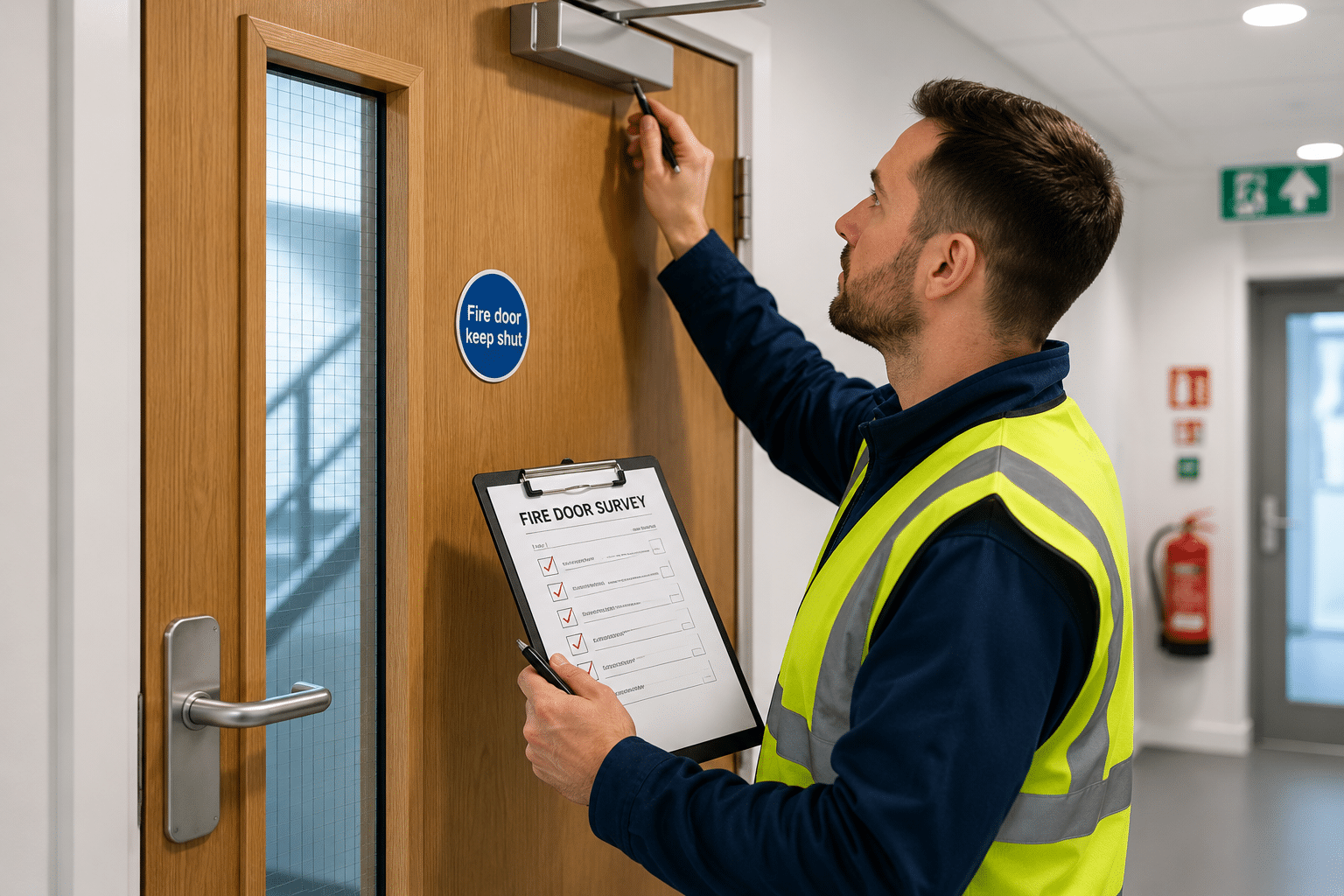
A fire door only does its job if the whole doorset is in suitable condition: the door leaf, frame, ironmongery, seals and closer. Our inspections are visual. We look at each door on site and record the condition of the following.
Visible damage, warping, cracking, poor alignment, deterioration and signs of unsuitable alteration.
Excessive or uneven gaps between the door and its frame.

Loose fixings, damage, missing parts, and unsuitable hinges, handles, locks or latches.
Where fitted, whether they are damaged, missing, painted over or poorly fitted.
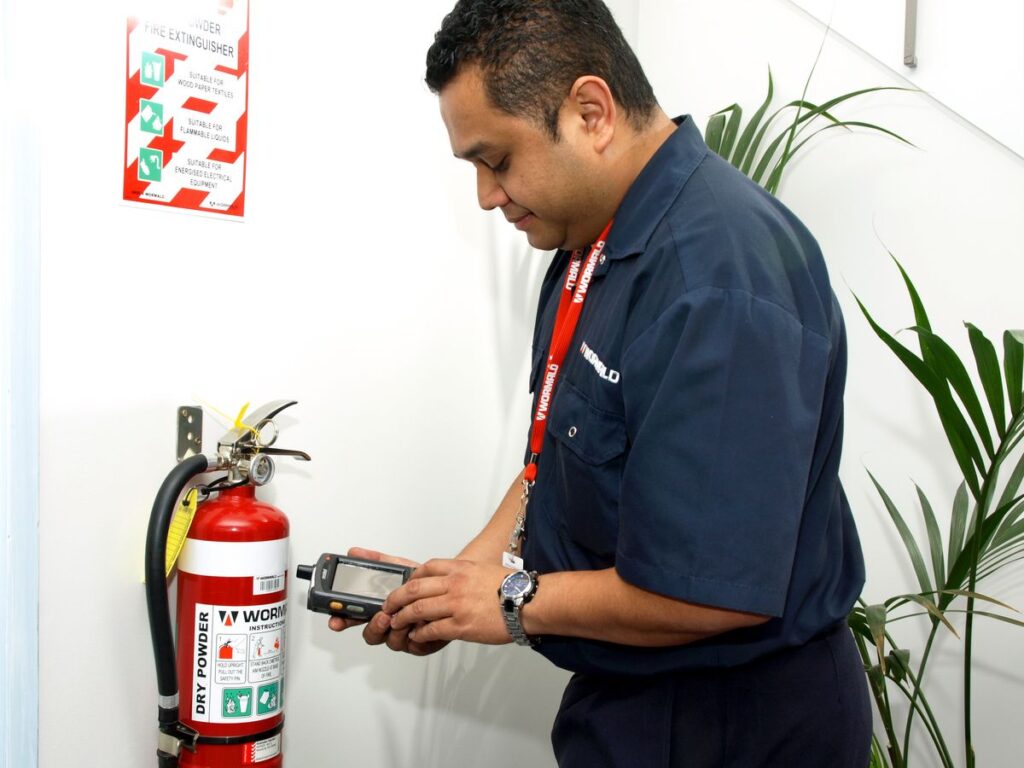
Whether the door closes fully and latches, whether the closer works, and whether the door is wedged or held open.
Visible condition, security and signs of damage or unsuitable alteration.
Whether fire door signage is present, visible and suitable for how the door is used.
A visual inspection records visible defects without destructive or fire testing. It cannot determine how a door would perform in an actual fire. A fire strategy report addresses wider fire safety design considerations beyond the visible condition of individual fire doors.
After the inspection, you receive a written record of the condition of each door inspected, visible defects and recommended next steps. Use it to brief a contractor, plan remedial work and maintain your fire safety records.
Inspection report
Records the visible condition of the doors inspected on the day.
Fire risk assessment
Assesses fire risks across the building and required precautions.
Our report does not replace it. We offer
fire risk assessments in London
separately.
Compliance certificate
Our report is not a certificate of a door's fire-resistance rating
and does not, by itself, confirm that the building complies with
fire safety law.
London Safety Checks provides fire door inspections across key London boroughs, helping landlords, property managers and businesses keep their fire safety records up to date.
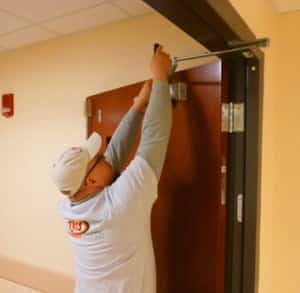
Our fire door inspections are suitable for anyone who needs the condition of fire doors recorded in writing, including:
Whether you are legally required to check fire doors, and how often, depends on the type of building. The next section explains the main rules.
The Regulatory Reform (Fire Safety) Order 2005 requires the responsible person to carry out and regularly review a fire risk assessment and keep fire safety equipment and facilities in good working order. The Fire Safety Act 2021 extended these requirements to include flat entrance doors in relevant residential buildings. Under the Fire Safety (England) Regulations 2022, residents must receive fire door safety information, while communal fire doors in blocks over 11 metres must be checked every three months and flat entrance doors at least annually. For other premises, checking frequency should be determined through the fire risk assessment.
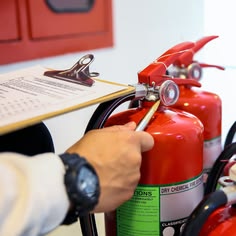
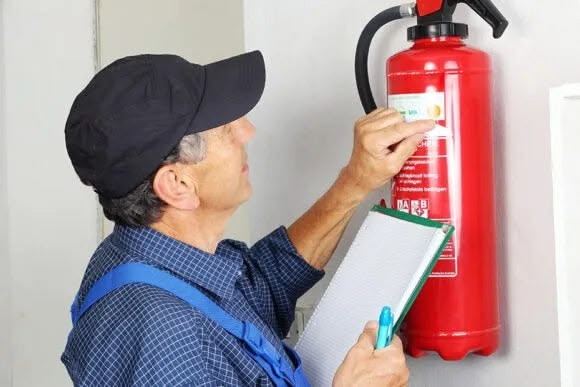
Fire safety arrangements also involve ensuring firefighting equipment is maintained and ready for use. Regular fire extinguisher servicing helps confirm that extinguishers remain in suitable working condition as part of a property’s wider fire safety arrangements.
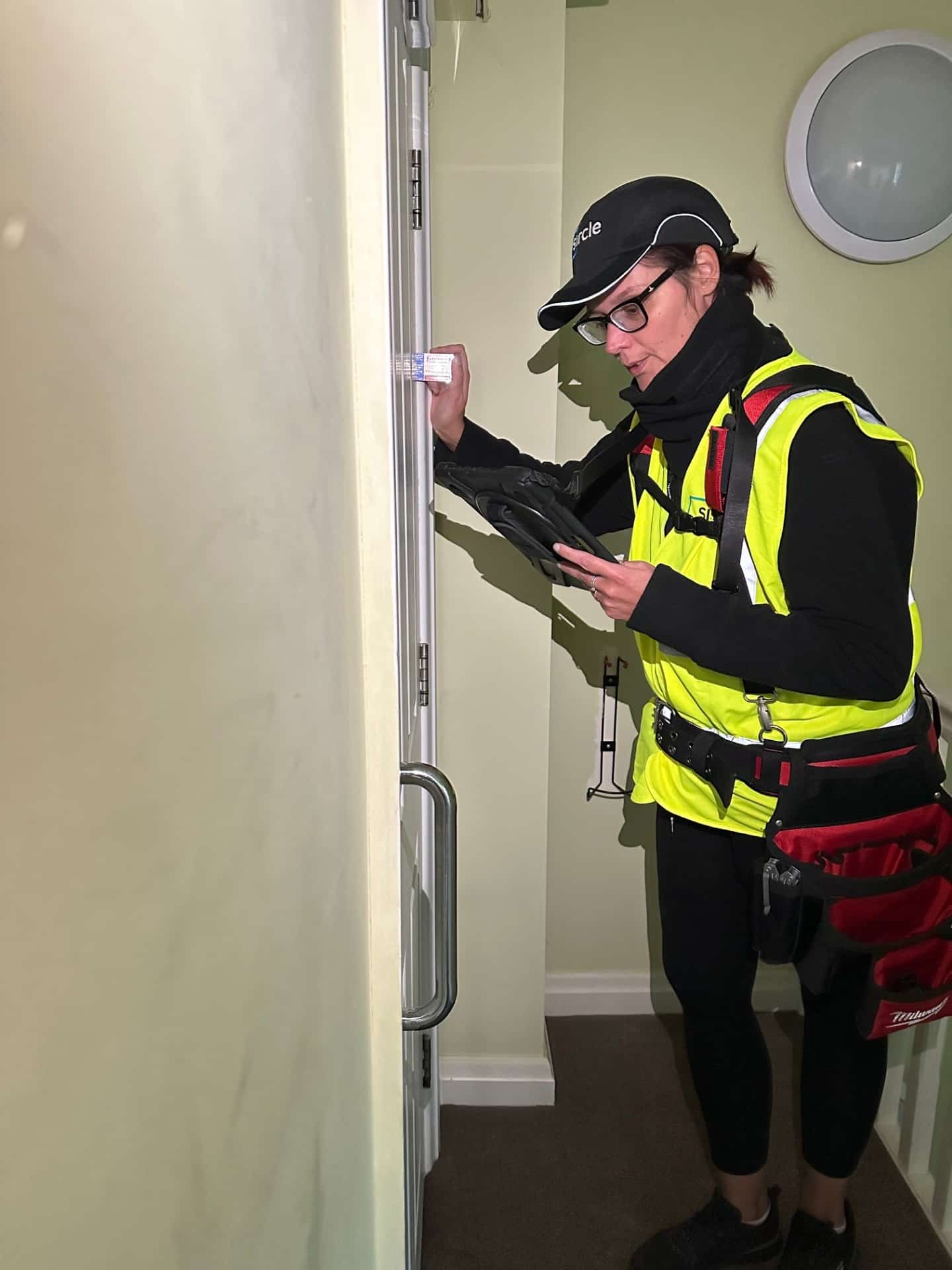

The routine checks required by Regulation 10 are the responsible person’s own duty. GOV.UK guidance describes them as simple visual checks that, with appropriate instruction, a caretaker, managing agent or maintenance person can carry out, and says a specialist is not needed for them. The same guidance says these checks do not replace periodic assessment of fire doors by fire safety specialists.
You do not have to buy a specialist inspection to meet the routine checking duty. A written inspection report from us is an additional record of the condition of each door we inspect, and gives you a clear list of defects to act on. It does not transfer any of the responsible person’s duties to us.
This page is general information, not legal advice. Check your own obligations against the legislation and your fire risk assessment.
We follow a clear process so you know which doors were checked, what defects were found and what action may be needed.
Call 020 8129 4435, email info@londonsafetychecks.co.uk, or use our contact page. Tell us your address, property type and approximate number of doors.
We provide a quote based on the number of doors to be inspected and arrange a suitable visit.
Our inspector examines each agreed fire door and records its visible condition and any defects identified.
You receive a written report detailing the condition of inspected doors, identified defects and recommended next steps.

London Safety Checks provides professional fire door inspections for landlords, property managers and businesses across London. Our team helps you understand the real condition of your fire doors and identify issues that may need attention.
We inspect the key parts of the fire door assembly, including the door leaf, frame, hinges, seals, closers and hardware. Instead of only listing defects, we provide clear and practical findings so you can decide whether repair, maintenance or further assessment is needed.
Fire door inspections cost £30-£85 per door. The price for your building depends on the doors to be inspected, so we quote once we know the address, the type of building and roughly how many fire doors it has.
Answers to help you navigate your compliance journey with confidence.