
Fire safety matters at home, in the office, and in industrial spaces. Every year, many fires start because risks are ignored or equipment is missing. Having the right fire extinguisher nearby can help control a small fire before it spreads.
Fire extinguishers are designed for different types of fires. Using the wrong one may make the situation more dangerous. Learning the main extinguisher types helps you choose safely, act faster, and protect people, property, and equipment when a fire begins.
Key Takeaways:
- Different fire classes need different fire extinguisher types, so choosing the correct one is essential for safety.
- ABC dry powder extinguishers can cover several fire risks, while cooking-oil and metal fires require specialist extinguishers.
- Regular maintenance and understanding the PASS method can help you respond safely during a small fire emergency.
Different Fire Classes and Their Uses
Before learning about fire extinguisher types, it helps to understand the UK fire classes.
| Fire class | Material involved | Common examples |
| Class A | Solid combustible materials | Paper, wood, cardboard and textiles |
| Class B | Flammable liquids | Petrol, diesel, paint and oils |
| Class C | Flammable gases | Propane, butane and methane |
| Class D | Combustible metals | Magnesium and other reactive metals |
| Class F | Cooking oils and fats | Deep-fat fryers and hot cooking oil |
The 4 Main Types of Fire Extinguishers: A Complete Guide
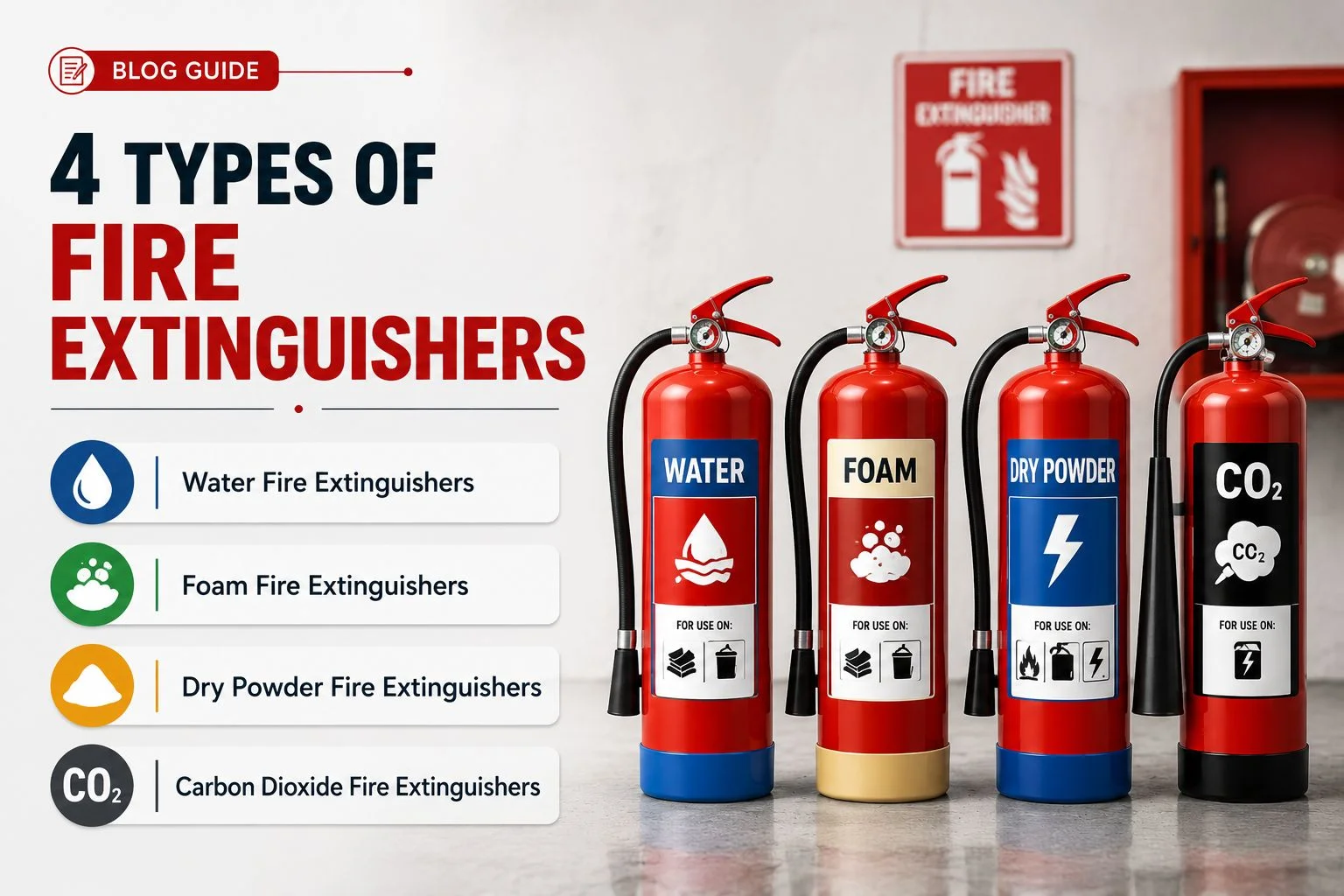
The four main fire extinguisher types are easy to identify by their colour labels. Water uses red, foam uses cream, dry powder uses blue, and CO₂ uses black. Knowing these colours helps people choose safer fire safety equipment during emergencies.
- Water Fire Extinguishers
- Foam Fire Extinguishers
- Dry Powder Fire Extinguishers
- Carbon Dioxide (CO2) Fire Extinguishers
1. Water Fire Extinguishers
Water fire extinguishers are used for Class A fires involving materials like wood, paper, and cloth. They cool the burning material and help stop the flames from spreading. This makes them a simple and effective choice for many common fires.
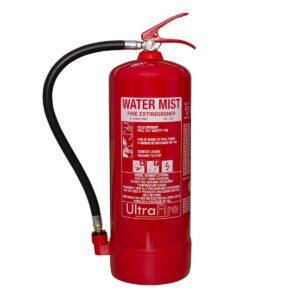
Colour code: Red
How they work: When you discharge a water extinguisher, pressurised water shoots out and drenches the burning material, cooling it below its ignition temperature. The water also smothers some of the oxygen, further suppressing the flames.
Best used for: Class A fires only—wood, paper, textiles, and ordinary combustible materials. You’ll typically find these in warehouses, offices, and homes.
Advantages:
- Highly effective on Class A fires
- Affordable and eco-friendly
- Large capacity means more extinguishing power
- No toxic residue
Disadvantages:
- Completely ineffective and dangerous on electrical fires (Class C) or flammable liquid fires (Class B)
- Leaves water damage in the area
- Heavier than other extinguishers
- Can’t be used below freezing temperatures
Where to use: Offices, homes with minimal electrical fire risks, warehouses storing combustible materials, and schools.
2. Foam Fire Extinguishers
Foam fire extinguishers are suitable for Class A and Class B fires involving materials like wood, paper, petrol, and paint. They form a cooling foam layer over the fuel, helping block oxygen, control flames, and reduce the chance of reignition.
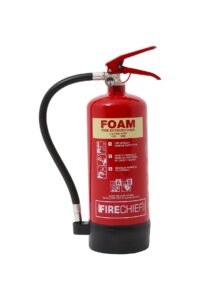
Colour code: Cream
How they work: Foam extinguishers release a blanket of foam that cools the fire while simultaneously creating a barrier that prevents oxygen from reaching the burning material. The foam also prevents vapour from rising from flammable liquids, which further suppresses combustion.
Best used for: Class A and Class B fires. This makes them ideal for petrol stations, warehouses with mixed materials, and offices with electrical equipment and flammable storage.
Advantages:
- Versatile, works on two fire classes
- Effective cooling action
- Reduces the risk of reignition
- Less damaging than water to electrical equipment (though still not safe to use on live electricity)
Disadvantages:
- More expensive than water extinguishers
- Creates a significant mess that requires cleanup
- Less effective in windy conditions
- Can damage some surfaces due to foam residue
Where to use: Commercial kitchens, manufacturing facilities, petrol stations, automotive workshops, and storage areas with mixed materials.
A correctly rated foam extinguisher may suit a small paint or fuel fire. It is not the normal first choice for a live electrical panel.
3. Dry Powder Fire Extinguishers
Dry powder fire extinguishers are useful for Class A, B, and C fires involving solids, liquids, and gases. They work quickly by stopping the fire’s chemical reaction, but the powder can reduce visibility, affect breathing, and leave a mess indoors.

Colour code: Blue
How they work: Dry powder works by interrupting the chemical reaction of fire (breaking the fire triangle). The powder particles settle on the burning material, cooling it and preventing oxygen from reaching the flame. Different powder types work slightly differently, but this is the general principle.
Best used for: Class B and Class C fires, with some formulations also effective on Class A. Multi-purpose dry powder is often the choice for general-purpose fire extinguishers in mixed environments.
Advantages:
- Multi-purpose formulations available
- Effective on several fire classes
- Good range of discharge
- Suitable for outdoor use
- Relatively affordable
Disadvantages:
- Creates significant dust and mess
- Can reduce visibility, making it harder to evacuate safely
- Powder residue can damage equipment and require extensive cleaning
- Less effective on large fires
- Can be uncomfortable and irritating to use indoors
- Some formulations are less effective than specific alternatives
Where to use: Garages, workshops, storage facilities, outdoor equipment areas, and as a general-purpose backup extinguisher.
4. Carbon Dioxide (CO2) Fire Extinguishers
Carbon dioxide fire extinguishers are commonly used for electrical equipment and some flammable liquid fires. They release CO₂ gas to reduce oxygen around the flames and leave no messy residue, making them useful near computers, servers, machinery, and electrical panels.

Colour code: Black
How they work: Carbon dioxide is stored as a liquid under pressure. When discharged, it expands into a gas that displaces oxygen and cools the fire simultaneously. Importantly, CO₂ leaves no residue and doesn’t conduct electricity, making it safe for electrical fires.
Best used for: Class B and Class C fires. These are your go-to choice for server rooms, electrical panels, computer labs, and any environment with sensitive electrical equipment.
Advantages:
- Safe on electrical fires (Class C)
- Leaves no residue or mess
- Won’t damage electronics or delicate equipment
- Non-toxic and environmentally friendly
Disadvantages:
- Expensive compared to water extinguishers
- Smaller capacity means less extinguishing power
- Can be uncomfortable to use (the discharge is extremely cold)
- Less effective in outdoor or windy conditions due to gas dispersal
- Completely ineffective on Class A fires
Where to use: Server rooms, IT departments, electrical distribution areas, data centres, telecommunications facilities, and laboratory equipment spaces.
Comparison of the 4 Fire Extinguishers
| Type | Best For | Classes | Cost | Residue | Electrical Safety |
| Water Fire Extinguishers | Ordinary combustibles | A | Low | High | Unsafe |
| Foam Fire Extinguishers | Liquids & combustibles | A, B | Medium | High | Caution |
| CO₂ Fire Extinguishers | Electrical fires | B, C | High | None | Safe |
| Dry Powder Fire Extinguishers | Multi-purpose | A, B, C* | Medium | High | Safe |
Fire extinguisher types and uses for different classifications of fire (UK):
Get Help Now
How to Use and Maintain a Fire Extinguisher
Before using a fire extinguisher, raise the alarm, call for help, and keep a clear exit behind you. Pull the pin, aim at the base of the flames, squeeze the handle, and sweep slowly from side to side with care.
Check your fire extinguisher regularly for damage, blocked nozzles, broken seals, or low pressure. Keep it visible and easy to reach, arrange yearly professional servicing, and replace or recharge it immediately after use or whenever an inspection finds a problem.
Fire Extinguisher Usage: Step-by-Step PASS Method
The PASS method helps you remember how to use a fire extinguisher safely. Raise the alarm first, keep a clear exit behind you, and only approach a small fire when you have the correct extinguisher.
P – Pull: Pull out the safety pin to unlock the extinguisher.
A – Aim: Point the nozzle at the base of the flames, not at the smoke.
S – Squeeze: Press the handle slowly to release the extinguishing agent.
S – Sweep: Move the nozzle from side to side until the flames are controlled.
Stop immediately and leave the area if the fire spreads, smoke becomes heavy, or the extinguisher does not work quickly.
How to Choose the Right Fire Extinguisher
Conclusion
Understanding types of fire extinguishers is a useful starting point. Water, foam, dry powder, and CO2 each have different uses and limits, while wet chemical protection is essential where hot cooking oils are present.
Check the colour band, read the label, and make sure the extinguisher matches the actual fire risk. For a workplace or shared commercial premises, use a professional fire risk assessment rather than guessing.
Frequently Asked Questions
What Are the Four Types of Fire Extinguishers?
Water Extinguishers: Cool and douse Class A fires (wood, paper, fabric)
Foam Extinguishers: Suppress Class A and B fires (combustibles and liquids)
CO₂ Extinguishers :Displace oxygen for Class B and C fires (liquids and electrical)
Dry Powder Extinguishers :Multi-purpose for Class A, B, and C fires
What Are the Classes of Fire Extinguishers?
Fire extinguishers are classified by the types of fires they can safely handle:
Class A :Ordinary combustibles (wood, paper, textiles, plastics)
Class B :Flammable liquids (petrol, oil, paint, kerosene)
Class C: Electrical fires (equipment, appliances, power lines)
Class D: Combustible metals (rare; specific industrial use)
Class F: Cooking oils and fats (deep-fat fryers, commercial kitchens)
What Are the 4 Methods of Extinguishing a Fire?
Cooling: Lower the temperature below the fire’s ignition point (water extinguishers)
Smothering: Remove oxygen by creating a blanket over the fire (foam, CO₂, powder)
Starving: Remove fuel from the fire (turning off gas, moving combustibles away)
Interrupting the Chemical Chain Reaction: Break the combustion process (dry powder agents)
How Much Cost of Fire Extinguishers in the UK
Fire extinguishers are available at various price points depending on type, capacity, and supplier. Prices vary significantly based on extinguisher type.


