A black plastic electrical box is not automatically dangerous. However, some older UK properties contain black phenolic service cut-outs that may develop safety problems as the insulating material ages. In certain conditions, the material can become conductive, overheat or fail. The first step is to identify the box correctly before deciding what action is needed.
This article explains how to identify the box, recognise warning signs, and understand what action to take.
What Is the Black Plastic Electrical Box Near a Meter?
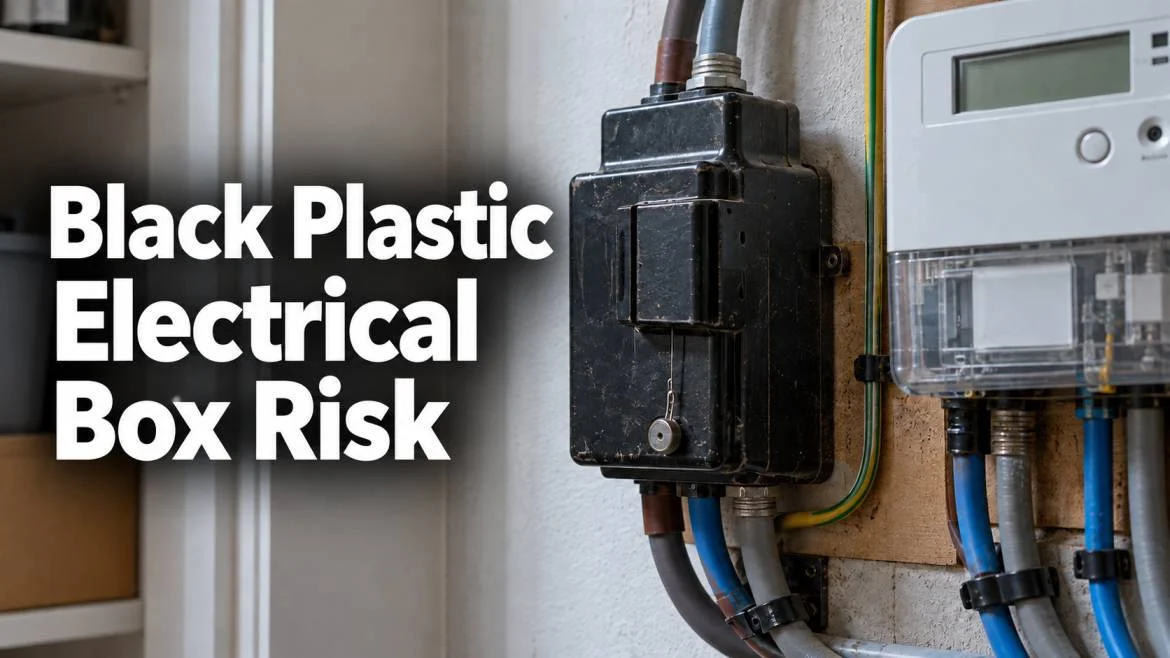
The black plastic box found beside an electricity meter is often an older phenolic service cut-out. It connects the incoming electricity supply from the local network to the wiring inside the property. The unit normally contains the main service fuse and is usually controlled by the local Distribution Network Operator (DNO).
Older black phenolic cut-outs were installed widely in UK properties from the late 1960s into the early 1990s. Their presence does not automatically mean that the property is unsafe, but their age and condition may justify professional assessment.
Black Phenolic Cut-Out vs Plastic Consumer Unit
These two components are often confused.
| Black phenolic cut-out | Plastic consumer unit |
| Usually located beside the electricity meter | Usually installed inside the property |
| Connects the network supply to the building | Distributes electricity to individual circuits |
| Usually controlled by the DNO | Usually part of the private electrical installation |
| Contains the main service fuse | Contains circuit breakers, RCDs and the main switch |
| Network operator normally handles it | Registered electrician normally handles it |
A black box behind a socket or an external meter cabinet is also a different component. Colour alone cannot identify the equipment or confirm its risk.
Need to know about EICR? Read our guide on what an EICR is
Why Can an Old Black Plastic Cut-Out Be Risky?
An old black phenolic cut-out can become unsafe when heat, age or moisture causes its insulating material to deteriorate and become carbonised or electrically conductive. This may lead to overheating, arcing, electric shock or fire. However, black colour alone does not confirm danger; the unit’s condition should be assessed by the relevant qualified professional.
Warning Signs of a Failing Black Electrical Box
Some problems are visible, while others may appear as unusual electrical symptoms inside the property.
Visible signs
Look for signs from a safe distance, without touching the box or removing its cover:
- Melting or warped plastic
- Cracks in the casing
- Scorch marks or blackening
- Discolouration
- Damaged covers
- Exposed wiring
- Signs of corrosion or water ingress
Smell, sound and heat
Warning signs may also include:
- Burning or fish-like smells
- Buzzing, sizzling or crackling sounds
- Smoke
- Visible sparks or arcing
- An enclosure that appears unusually hot
- Repeated electrical tripping
Do not touch the box to check whether it is hot. If the equipment is producing smoke, sparks or a strong burning smell, move away and seek urgent professional assistance.
Electrical symptoms inside the property
A problem near the incoming supply may cause flickering lights, repeated power interruptions, partial loss of electricity, frequently tripping circuit breakers, unusual electrical smells or nearby cables and equipment becoming warm. These symptoms can have other causes, but they should still be assessed by a qualified electrician.
These symptoms can have other causes, so they do not prove that the black box is faulty. They do indicate that the electrical installation should be assessed.
Is Every Black Plastic Electrical Box Dangerous?
No. Several different electrical components may appear black or contain plastic.
Black phenolic service cut-out
This is the main component associated with concerns about ageing black plastic electrical boxes near UK electricity meters. It may require assessment by the DNO or its authorised contractor.
Plastic consumer unit
An older plastic fuse board may raise concerns about its enclosure, internal connections, RCD protection, or general condition. A registered electrician should assess it.
External meter box
An outdoor meter cabinet may become damaged by sunlight, UV exposure, heat, impact or water. Cracks and warping can reduce protection, but this is a different issue from deterioration inside a phenolic cut-out.
Back box behind a socket
A back box or pattress box holds a socket or switch in place. It is not the same as a service cut-out. Problems may involve poor mounting, insufficient space, damaged wiring or overheating around the accessory.
What Should You Do If You Find a Black Plastic Electrical Box?
Do not touch or open it: Never remove covers, disturb cables, break seals, paint the unit or attempt repairs.
Check it safely: Look from a distance for melting, smoke, burning smells, unusual sounds or visible damage.
Record the problem: Note the box’s location, symptoms and any effect on the electricity supply. Take a photo only from a safe distance.
Contact the right professional: Contact the DNO for a service cut-out, a registered electrician for internal wiring or your landlord if you rent.
Get urgent help: If there is smoke, fire, arcing or exposed wiring, move away and contact emergency services or the network operator. Once the immediate danger is addressed, London Safety Checks can inspect the property’s private electrical installation through an EICR.
Who Is Responsible for Replacing a Black Plastic Electrical Box?
Responsibility depends on the component.
Distribution Network Operator: The DNO normally controls the service cut-out and incoming network equipment. Residents should not remove or replace this equipment themselves.
Registered electrician: An electrician normally inspects and works on the private electrical installation, including the consumer unit, sockets and internal wiring.
Landlord: A landlord should respond promptly to reports of overheating, damage, burning smells, arcing or other electrical hazards and arrange a competent inspection.
Tenant: A tenant should report the problem quickly and avoid touching or opening the equipment. Electrical repairs should not be attempted by the tenant.
Does a Black Plastic Cut-Out Need Immediate Replacement?
Not every black plastic cut-out requires emergency replacement. A professional must assess the equipment’s design, age, condition, connections and any evidence of overheating or deterioration. Replacement may be recommended when there are:
- Signs of material breakdown
- Loose or overheated connections
- Cracking or melting
- Arcing or electrical tracking
- Damaged insulation
- Repeated supply problems
- Evidence that the unit has failed or is likely to fail
A box that looks old but shows no visible symptoms should still be assessed if there is concern about its condition. However, it should not be labelled an immediate fire risk solely because it is black.
Can an EICR Identify the Problem?
An Electrical Installation Condition Report (EICR) may identify defects in the private electrical installation, such as a damaged consumer unit, poor connections, overheating or inadequate protection. For commercial buildings, a Commercial EICR can identify overheating, damaged electrical equipment, unsafe connections and other installation defects.
However, an EICR does not give an electrician permission to open or replace network-owned service equipment. If the concern relates to the cut-out beside the meter, the DNO or its authorised contractor may need to investigate it.
Concerned About Electrical Safety for your Property?
If the black box is connected to your consumer unit, internal wiring or other private electrical equipment, London Safety Checks can carry out a professional EICR inspection. We assess the condition of the installation, identify overheating or wiring defects and provide a clear report with recommended action.
Frequently Asked Questions
What is the black plastic box beside my electricity meter?
It is often an older black phenolic service cut-out. It connects the incoming mains supply to the property and usually contains the main service fuse.
Is a black phenolic cut-out a fire risk?
It can present a risk if the insulating material has deteriorated or if connections are loose, overheated or damaged. Its condition must be assessed professionally.
Are all black plastic electrical boxes unsafe?
No. Black boxes may include cut-outs, consumer units, meter cabinets or back boxes. Each has a different purpose and risk profile.
Can I open the box to check it?
No. Do not open or disturb an electrical box near the meter. It may contain live supply equipment.
Who replaces a black electricity cut-out?
The relevant DNO or its authorised contractor normally handles the service cut-out.
What signs mean the box needs urgent attention?
Smoke, sparks, active arcing, a strong burning smell, severe melting, exposed conductors or an unusually hot enclosure require urgent professional help.
Is a black plastic consumer unit the same as a black cut-out?
No. A consumer unit distributes electricity to circuits inside the property. A cut-out connects the network supply to the building.
Can heat damage an external meter box?
Yes. Prolonged sunlight, UV exposure and high temperatures can cause cracking, warping, discolouration and loss of protection.
Summary
A black plastic electrical box is not automatically dangerous, but an older black phenolic service cut-out near an electricity meter can develop safety problems as its insulating material ages. Melting, cracks, burning smells, buzzing, smoke, arcing and repeated power problems require prompt attention.
Do not open, paint, remove or replace the box yourself. Contact the DNO for a service cut-out, a registered electrician for private wiring or a landlord for a rented property.