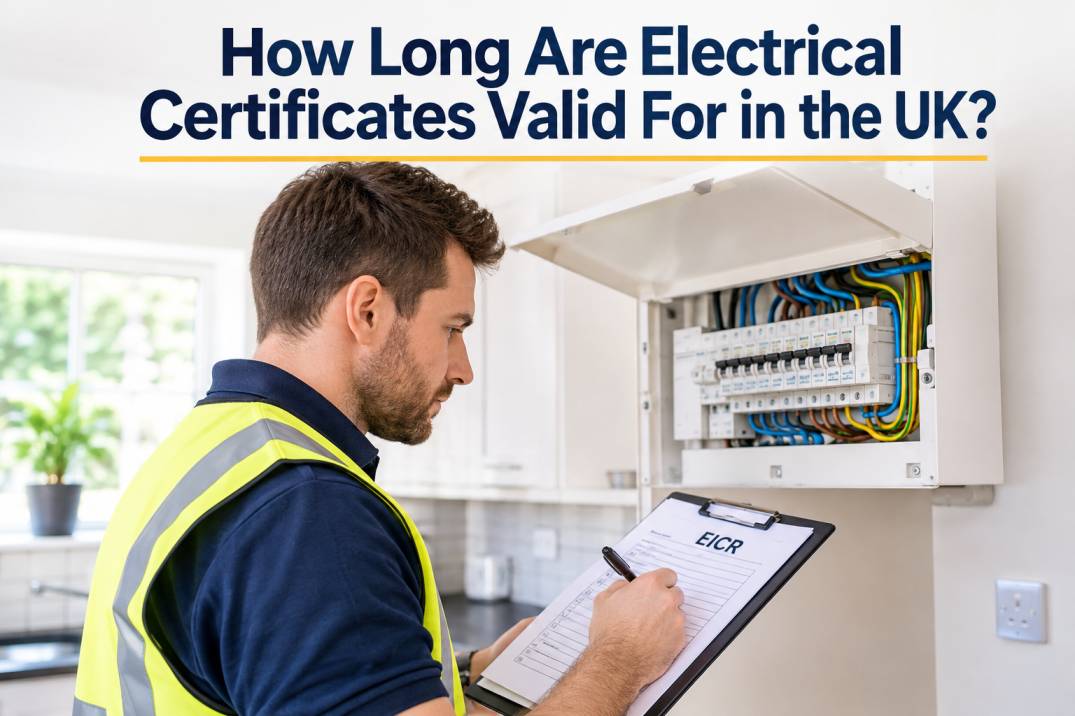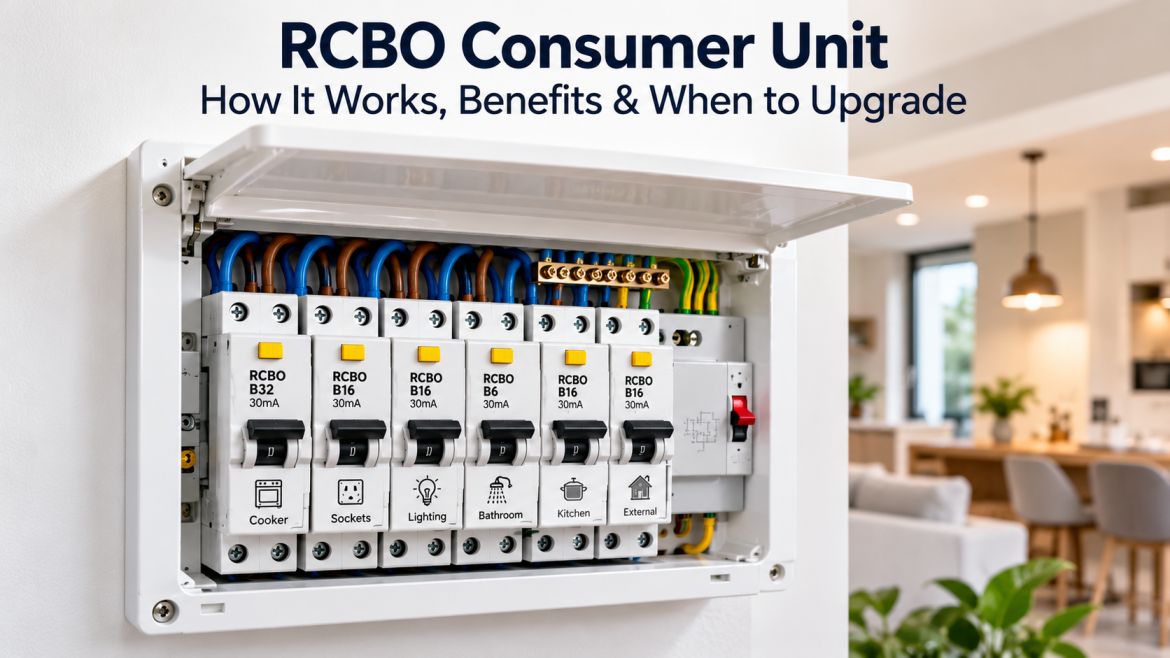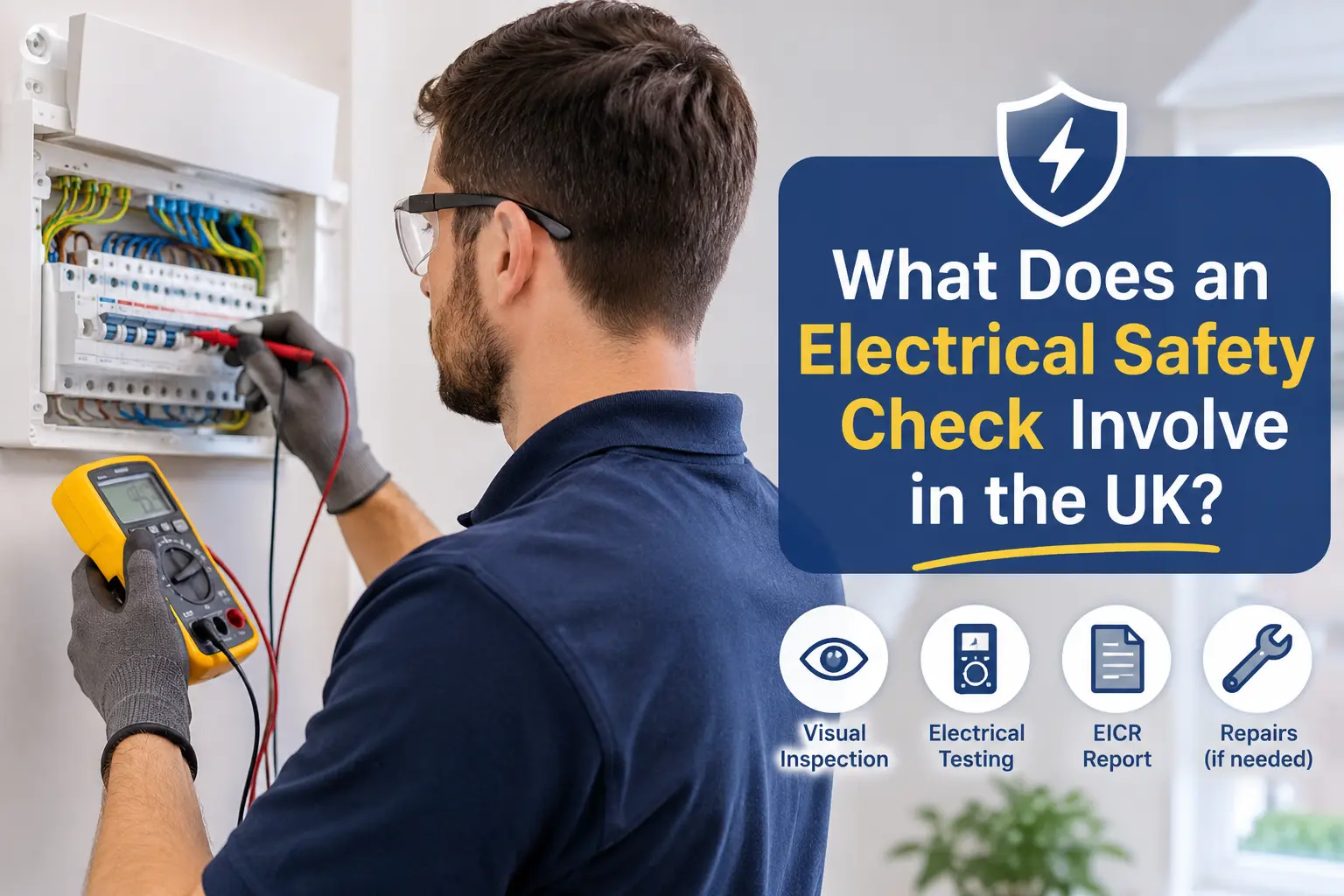
An electrical safety check involves examining and testing a property’s fixed electrical installation to identify damage, defects and potential safety hazards. A qualified electrician checks wiring, sockets, switches, the consumer unit and protective devices. The inspection usually produces an Electrical Installation Condition Report (EICR) that explains the installation’s condition and any work needed to keep it safe.
What Is an Electrical Safety Check?
An electrical safety check is an assessment of a property’s fixed electrical installation to determine whether it is safe for continued use. It involves a visual examination and a series of electrical tests to identify damaged wiring, deteriorating components, faulty connections and inadequate protective measures.
The inspection is commonly documented through an Electrical Installation Condition Report (EICR). This report records the electrician’s observations, test results and any defects requiring attention. The assessment is carried out with reference to BS 7671, the IET Wiring Regulations, which set the requirements for electrical installations in the UK.
What Does an Electrician Check During an Electrical Safety Check?
An electrician examines the fixed electrical components that distribute electricity throughout a property. This includes wiring, electrical accessories, the consumer unit and protective devices. The purpose is to identify visible damage, unsafe connections and defects that could affect the installation’s safety.
The main components checked include:
- Electrical wiring and cables: Examined for visible damage, deterioration, exposed conductors and unsuitable connections.
- Sockets and switches: Checked for loose fittings, damaged accessories, overheating and signs of wear.
- Light fittings: Examined for damaged components and unsafe electrical connections.
- Consumer unit (fuse box): Checked for its condition, circuit identification and suitability of protective devices.
- Circuit breakers and RCDs: Tested to establish whether the protective devices operate correctly.
- Earthing and bonding: Checked to determine whether the necessary protective connections are present and effective.
- Fixed electrical equipment: Relevant permanently connected equipment, such as electric showers and extractor fans, may also be examined.
What Is Not Included in an Electrical Safety Check?
A standard EICR assesses the fixed electrical installation rather than every electrical appliance inside a property. Portable appliances such as kettles, televisions, toasters and extension leads are generally assessed separately through in-service inspection and testing, commonly known as PAT testing.
This distinction matters for landlords who supply appliances with rental properties, as separate electrical equipment safety obligations may apply depending on the tenancy type and relevant regulations.
What Happens During an Electrical Safety Check? (Step by Step)
An electrical safety check involves a combination of visual inspections and electrical tests. The electrician examines accessible components, isolates circuits where necessary, carries out appropriate measurements and records any defects. The process normally follows several stages to assess the condition of the installation.
1. Visual Inspection
The electrician begins by examining accessible parts of the electrical installation for visible damage, deterioration and signs of poor workmanship. This includes checking wiring, sockets, switches, light fittings and the consumer unit for conditions that could create electrical hazards.
They also look for exposed conductors, loose connections, signs of overheating and unsuitable modifications. If a problem is identified, additional testing may be required to establish its extent and whether it affects the safety of the installation.
2. Dead Electrical Testing
Dead testing involves examining electrical circuits while they are isolated from the power supply. These tests help identify problems with wiring, connections and protective conductors without energising the circuits.
The main tests include:
- Continuity testing: Checks whether electrical conductors and protective conductors form complete paths without breaks or excessive resistance.
- Ring circuit continuity testing: Examines ring final circuits to establish whether the conductors form the intended ring and have appropriate continuity.
- Insulation resistance testing: Measures resistance between conductors to identify damaged insulation or unwanted electrical leakage.
- Polarity testing: Checks that electrical connections are correctly arranged and that conductors are connected to the appropriate terminals.
These tests help identify wiring defects that may not be visible during the initial inspection.
3. Live Electrical Testing
Once the necessary dead tests have been completed, the electrician carries out relevant measurements with the installation energised, where safe and appropriate. These tests establish whether the electrical installation and its protective devices operate correctly under normal electrical conditions.
Common live tests include:
- Earth fault loop impedance testing: Measures the impedance of the fault-current path to establish whether protective devices can disconnect the supply within the required time if an earth fault occurs.
- RCD testing: Checks whether Residual Current Devices operate correctly and disconnect the circuit within the required time.
- Supply measurements: Relevant electrical readings are taken to assess the installation’s operating conditions and protective arrangements.
4. Examination of Sockets, Switches and Electrical Connections
An electrician may remove selected sockets, switches and other electrical accessories to examine the wiring connections behind them. This allows them to identify problems such as loose connections, damaged conductors, poor terminations and signs of overheating that may not be visible externally.
The number of accessories examined depends on the property’s electrical installation, the condition of its circuits and the findings from earlier tests. It does not necessarily mean every socket and switch will be removed.
5. Recording Findings and Preparing the EICR
After completing the inspection and testing, the electrician records the results and any observations that could affect electrical safety. The EICR documents the condition of the installation, identifies defects using standard classification codes and states whether the installation is satisfactory or unsatisfactory.
The report also includes recommendations for remedial work or further investigation where necessary. Property owners can use these findings to understand the condition of their electrical installation and determine what action is required.
How Long Does an Electrical Safety Check Take?
An electrical safety check generally takes a few hours for a typical residential property, although the duration depends on the size and complexity of the installation. Larger properties with more electrical circuits or existing defects usually require additional inspection and testing time.
The main factors affecting the duration include:
- Property size: Larger homes generally contain more electrical accessories and circuits to examine.
- Number of circuits: Each relevant circuit requires appropriate inspection and testing.
- Installation condition: Damaged wiring, outdated components and previous electrical modifications may require further investigation.
- Accessibility: Restricted access to sockets, switches, lofts or the consumer unit can delay the inspection.
- Previous electrical reports: Earlier EICRs and installation certificates can help the electrician understand the existing installation.
Providing previous electrical documentation and ensuring the relevant areas are accessible can help the electrician complete the inspection more efficiently.
Does an Electrical Safety Check Require the Power to Be Switched Off?
Yes. Parts of the electrical installation must be isolated from the power supply during an EICR because several tests can only be performed safely on de-energised circuits. The electricity may also need to be restored temporarily for live testing once the necessary safety checks have been completed.
Depending on the property’s electrical arrangement, the electrician may isolate individual circuits or switch off the main supply temporarily. Homeowners and tenants should prepare for interruptions to lighting, heating and electrical appliances. The electrician should explain the expected arrangements before testing begins.
How Should You Prepare for an Electrical Safety Check?
Preparing the property before the electrician arrives helps provide safe access to the electrical installation and reduces unnecessary delays. You do not need to carry out electrical work yourself, but making the relevant areas accessible allows the inspection and testing to proceed more efficiently.
Before the appointment:
- Clear access to the consumer unit: Make sure the electrician can safely reach the main fuse box and associated equipment.
- Make sockets and switches accessible: Move furniture and belongings that prevent access to electrical accessories.
- Arrange access to other areas: Make lofts, cupboards, basements and relevant external areas accessible where necessary.
- Provide previous reports: Share earlier EICRs, electrical installation certificates and details of previous electrical alterations.
- Mention known problems: Inform the electrician about tripping circuits, flickering lights, overheating sockets or other electrical faults.
- Prepare for power interruptions: Save work on electronic devices and plan around the temporary loss of electricity.
What Happens After an Electrical Safety Check?
After completing the inspection and testing, the electrician provides an Electrical Installation Condition Report (EICR). The report explains the condition of the fixed electrical installation, records any defects and indicates whether remedial work or further investigation is necessary.
The report will generally classify the installation as either satisfactory or unsatisfactory. A satisfactory result means no observations requiring further investigation or remedial action have been identified under the reporting criteria. An unsatisfactory result means certain defects or uncertainties require attention.
What Do EICR Codes C1, C2, C3 and FI Mean?
Electricians use classification codes to communicate the seriousness of defects identified during an electrical safety check. These codes help property owners understand which issues require immediate attention, which need further investigation and which are recommendations for improvement.
| Code | Meaning | Required action |
| C1 | Danger present | Immediate action to remove the danger. |
| C2 | Potentially dangerous | Urgent remedial action required. |
| C3 | Improvement recommended | Improvement advised but not required for a satisfactory report. |
| FI | Further investigation required | Additional investigation without delay. |
An EICR containing a C1 or C2 observation is unsatisfactory. An FI observation also makes the report unsatisfactory until the required investigation has been completed. A C3 observation alone does not make an installation unsatisfactory.
What Happens If an Electrical Safety Check Is Unsatisfactory?
An unsatisfactory EICR means that identified defects or uncertainties need to be addressed. The electrician will explain the observations, their classification and the work required to establish whether the installation is safe for continued use.
The next steps generally involve reviewing the report, arranging necessary remedial work and completing any further investigations. Once the work is finished, the property owner should obtain appropriate written confirmation and retain the relevant electrical documentation. A complete rewire is not automatically necessary; the required work depends on the actual defects identified.
Who Needs an Electrical Safety Check and How Often?
Electrical safety checks are relevant to homeowners, landlords, tenants and commercial property owners. However, the reasons for arranging an inspection and the applicable legal requirements differ depending on the property type, its use and its location.
- Homeowners: Periodic inspections are recommended, particularly for older properties, after purchasing a home or when electrical problems arise. There is no general legal requirement for owner-occupied homes to have an EICR at fixed intervals.
- Landlords: Must arrange inspections and testing in accordance with the electrical safety regulations applicable to their rental properties.
- Tenants: Should receive the relevant electrical safety report from their landlord and report electrical faults or safety concerns.
- Commercial property owners: Should arrange suitable electrical inspections to assess installation safety and meet applicable workplace and property safety responsibilities.
Electrical Safety Checks for Residential Properties
Homeowners and landlords can arrange a residential EICR to assess the condition of the property’s fixed electrical installation. The inspection identifies electrical defects, deteriorating components and potential safety risks that may require remedial work.
London Safety Checks provides a Residential EICR Certificate in London for houses, flats and rental properties. The report helps property owners understand the condition of their electrical installations and identify any work needed.
Electrical Safety Checks for Commercial Properties
Commercial premises such as offices, shops and industrial buildings also require suitable electrical inspection and testing. The assessment considers the fixed installation, its protective devices and any defects that could affect employees, visitors or the safe operation of the premises.
Businesses and property managers can arrange a Commercial EICR Certificate in London to assess electrical installation safety and obtain a documented report. Testing can also be arranged around business hours to minimise disruption to daily operations.
How Often Are Electrical Safety Checks Required for Rental Properties in the UK?
The inspection requirements depend on the country where the rental property is located. In general, landlords across the UK must arrange electrical installation inspections at intervals of no more than five years, or sooner where the report specifies a shorter period. However, the legal frameworks and additional obligations differ.
- England: Private and social landlords covered by the applicable regulations must have electrical installations inspected and tested by a qualified person at least every five years. They must also provide tenants with the required report.
- Scotland: Landlords must arrange electrical safety inspections at least every five years. This includes an EICR for fixed installations and separate in-service inspection and testing of electrical equipment supplied with the property.
- Wales: Landlords must maintain a valid electrical condition report, with inspections required at least every five years or sooner where the report specifies a shorter interval.
- Northern Ireland: Private landlords must arrange inspections and testing at intervals of no more than five years under the Electrical Safety Standards for Private Tenancies Regulations (Northern Ireland) 2024.
Landlords should check the regulations applicable to their property rather than assume that the same legal requirements apply identically throughout the UK.
Frequently Asked Questions
Do Electricians Check Every Socket During an EICR?
No. Electricians do not necessarily remove and test every socket individually during an EICR. They examine a sample of electrical accessories based on the installation, test results and inspection findings. Additional checks may be necessary if defects or concerns are identified.
Can I Stay at Home During an Electrical Safety Check?
Yes, you can generally remain at home while an electrician carries out an EICR. However, some circuits may need to be isolated temporarily, affecting lighting and electrical appliances. The electrician should explain any expected interruptions before testing begins.
Do Electricians Remove Sockets During an EICR?
Yes, electricians may remove selected sockets, switches and other accessories to examine the wiring connections behind them. This helps identify loose connections, damaged conductors and signs of overheating that may not be visible externally.
Is an Electrical Safety Check the Same as PAT Testing?
No. An electrical safety check, commonly documented through an EICR, assesses the fixed electrical installation, including wiring, sockets and protective devices. PAT testing focuses on portable electrical appliances, such as kettles, televisions and extension leads.
Can an Electrical Safety Check Identify Hidden Wiring Problems?
Yes. Electrical tests such as insulation resistance and continuity testing can identify certain wiring defects that cannot be seen during a visual inspection. However, an EICR does not guarantee that every concealed defect will be discovered.
Do Homeowners Legally Need an EICR?
There is no general legal requirement for homeowners living in their own properties to obtain an EICR at fixed intervals. However, periodic electrical inspections are recommended to identify deterioration and potential safety hazards. Landlords have separate legal obligations depending on where their rental property is located.
Arrange an Electrical Safety Check in London
Keeping your property’s electrical installation safe starts with a professional inspection and accurate reporting. Whether you own a residential property, manage rental accommodation or operate commercial premises, London Safety Checks can arrange electrical safety checks across Greater London and Buckinghamshire.
Contact our team to discuss your property, arrange an EICR and receive a quotation for the required inspection.