Knowing what type of fire you are dealing with can make a critical difference when choosing how to respond. Class A fires involve common combustible materials found in homes, offices, shops, and workplaces. Understanding the fuel involved helps you identify the right extinguisher, avoid dangerous mistakes, and take appropriate action before a small fire becomes harder to control.
In this guide, we’ll explain what a Class A fire is, what causes it, which extinguishers are suitable, what to avoid, and how to reduce the risk of these fires.
What Class A Fire Means
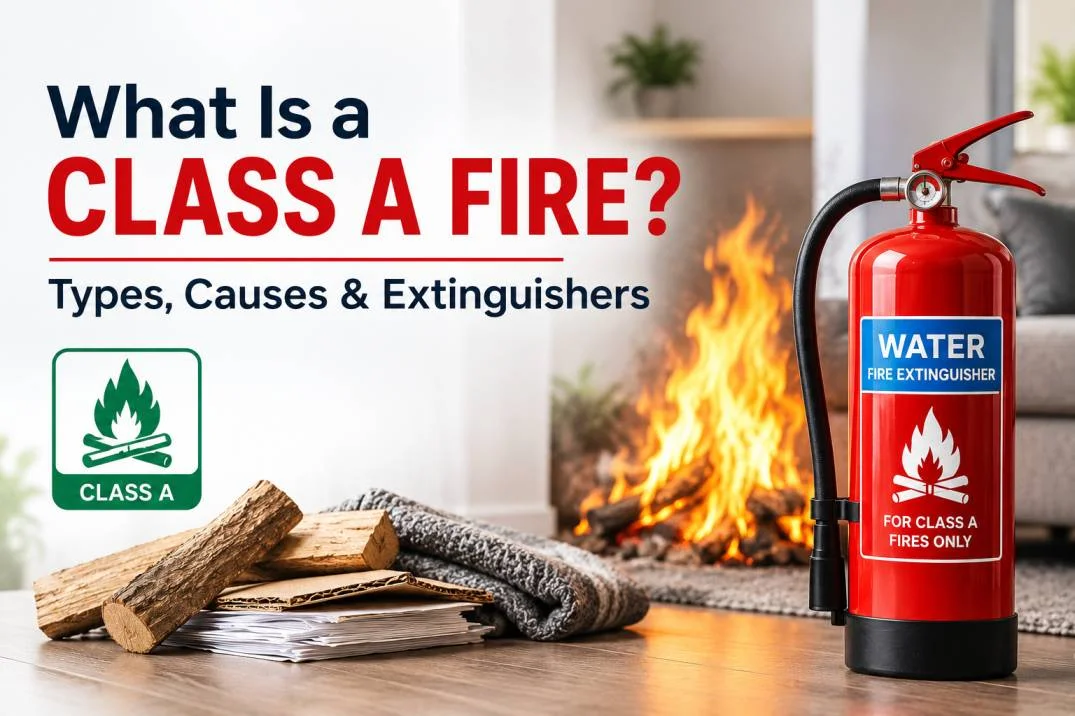
A Class A fire involves combustible solid materials, such as wood, paper, cardboard, textiles, furniture, and some plastics. These materials are usually organic or carbon-based and can burn with flames while producing glowing embers as they continue to smoulder.
Class A fires are common because these combustible materials are found almost everywhere, from furniture and packaging to clothing, building materials, books, and everyday household items. Once ignited, they can continue burning or smouldering even after the visible flames have reduced, which is why cooling the material thoroughly is important.
What Causes Class A Fires?
Class A fires start when a combustible solid material comes into contact with enough heat or an ignition source to reach its ignition point. Common causes include:
- Heaters: Radiators, portable heaters, or other heating equipment placed too close to furniture, curtains, paper, or other combustibles.
- Candles and open flames: Unattended candles, fireplaces, matches, and other flames can ignite nearby solid materials.
- Smoking materials: Cigarettes, matches, and hot ash can ignite furniture, bedding, paper, textiles, or rubbish.
- Faulty electrical equipment: Damaged wiring, overloaded equipment, or electrical appliances can generate enough heat to ignite nearby combustible materials.
- Cooking and other heat sources: Hot cooking equipment, ovens, grills, and similar heat sources can ignite surrounding materials when used carelessly.
- Machinery: Industrial or workshop machinery can create heat, friction, sparks, or hot particles that ignite combustible materials.
- Hot surfaces: Exhausts, heating elements, lamps, and other hot surfaces can ignite materials left too close to them.
- Poor storage and housekeeping: Accumulated cardboard, paper, packaging, textiles, or rubbish can provide fuel and allow a small ignition source to develop into a larger fire.
Where Are Class A Fires Most Common?
Class A fire risks exist almost anywhere combustible solids are present. Homes commonly contain furniture, clothing, paper, and wood, while offices and schools have paper, books, furniture, and other everyday combustibles. Warehouses and shops can carry larger quantities of packaging and stock, while workshops and construction sites may have timber, materials, and combustible waste that can be exposed to heat, sparks, or machinery.
What Fire Extinguisher Is Used for a Class A Fire?
For most Class A fire risks, a water-based fire extinguisher is the standard choice because it cools the burning material and helps prevent re-ignition. Foam extinguishers can also be suitable for Class A fires, while some dry powder extinguishers carry an A rating and can be useful where several types of fire risk are present. The correct extinguisher should always match its stated fire rating and the specific risks identified on the premises.
Water Fire Extinguishers
Water extinguishers are designed specifically for Class A fires involving materials such as wood, paper and textiles. Water works mainly by removing heat from the burning material, helping to reduce the temperature below the point where combustion can continue.
They are a straightforward choice where the main fire risk is ordinary combustible solids. However, do not use standard water extinguishers on live electrical equipment, as water can conduct electricity and create a serious shock hazard.
You may like to read: How Water fire extinguishers work
Foam Fire Extinguishers
Foam extinguishers can be used on Class A and Class B fires, making them useful where a premises has both solid combustible materials and flammable liquids such as petrol or diesel. They provide a cooling effect on Class A materials while also helping to form a layer over certain liquid fires.
For this reason, foam may make sense where the fire risk assessment identifies more than one relevant fire class. However, foam extinguishers are not suitable for live electrical equipment, and their suitability should always be checked on the extinguisher label.
Dry Powder Extinguishers
Some dry powder extinguishers have an ABC rating, allowing them to tackle Class A fires as well as certain liquid and gas fires. This makes them useful in locations where several different fire hazards may be present, such as workshops, garages, or areas with flammable gases.
The main drawback is that powder does not appreciably cool the fire, so re-ignition can occur. Discharged powder can also reduce visibility, affect people with breathing problems, and is not generally suitable for enclosed spaces. It can also contaminate equipment and, where electrical equipment is involved, may render it unusable.
Water Mist Extinguishers
Water mist extinguishers release water as very fine droplets rather than a conventional solid stream. The small droplets provide effective cooling while creating a mist around the fire, and some modern water mist extinguishers are designed to cover a wider range of fire risks. London Fire Brigade guidance notes that water mist units can be suitable for Class A and other fire types, including certain electrical risks.
However, not every water mist extinguisher has the same capabilities. Its suitability depends on the specific fire rating, design, and manufacturer instructions. For a Class A risk, check that the extinguisher is specifically rated for Class A fires rather than assuming that every water mist unit is suitable.
How Do You Put Out a Class A Fire?
The basic principle for controlling a Class A fire is to remove heat from the burning material and stop combustion. Water-based extinguishers are commonly used because they cool materials such as wood, paper, and textiles, helping reduce the chance of re-ignition. However, personal safety should always come before attempting to control a fire.
- Raise the alarm: Warn everyone nearby as soon as you discover the fire.
- Evacuate if there is danger: If the fire is growing, producing heavy smoke, blocking your escape route, or putting anyone at risk, leave the area immediately.
- Call the fire and rescue service: If the fire cannot be safely controlled or there is any doubt about the situation, evacuate and call the fire and rescue service.
- Only consider first-aid firefighting when safe: An extinguisher should only be considered for a small fire when you have a clear escape route and are trained or competent to use the equipment safely.
- Use the correct extinguisher: If it is safe to act, use an extinguisher that is specifically rated for the type of fire. For a typical Class A risk, this will commonly be a suitable water-based extinguisher.
Never put yourself or anyone else at risk to save property. If the fire is spreading or you are unsure whether it can be safely controlled, leave the building, stay out, and wait for the fire and rescue service.
How Do Class A Fire Extinguishers Work?
Different extinguishers control Class A fires in different ways, but the goal is the same: stop combustion and prevent the material from igniting again.
Water
Water primarily works by removing heat from the burning material. As the temperature of materials such as wood, paper, or textiles falls, combustion becomes harder to sustain. This cooling effect also helps reduce the risk of re-ignition.
Foam
Foam provides a cooling effect while creating a layer over the burning surface. This can help separate the fuel from heat and air, particularly when the extinguisher is also rated for Class B liquid fires. For Class A materials, its cooling action helps control the fire and reduce re-ignition.
Dry Powder
Dry powder works mainly by interrupting the combustion process and rapidly knocking down flames. However, unlike water-based extinguishers, powder provides limited cooling. The material can therefore remain hot after the flames have been suppressed, creating a greater risk of re-ignition.
Where Should Class A Fire Extinguishers Be Placed?
Class A fire extinguishers should generally be positioned where they are easy to access and reach quickly without putting people in unnecessary danger. Where the Class A risk is spread throughout a building, extinguishers are typically placed along escape routes, near room or floor exits, and close to final exits.
They should be clearly visible, accessible, and located where someone can reach them without having to pass through the fire. The exact number, type, and position of extinguishers depends on the premises, level of fire risk, layout, and fire risk assessment
Need Professional Fire Safety Support?
London Safety Checks provides professional fire extinguisher servicing, fire risk assessments, EICR certificates, emergency lighting, and fire door inspections to help businesses maintain safer, compliant premises. Whether you need your existing fire extinguishers serviced or want to identify wider fire safety risks, our team can help with the right solution for your property.
Frequently Asked Questions
What is a Class A fire?
A Class A fire involves combustible solid materials such as wood, paper, cardboard, and textiles. These fires commonly produce glowing embers as the material burns or smoulders.
What are examples of Class A fires?
Common examples include burning furniture, curtains, paper, cardboard, wooden materials, clothing, and other combustible solids. For example, a curtain catching fire from a heater would be a Class A fire.
What extinguisher is best for a Class A fire?
A water-based extinguisher is the standard choice for most Class A fire risks because it cools the burning material and helps prevent re-ignition. Foam and some other extinguishers may also be suitable when they carry the appropriate Class A rating.
Can you use a foam extinguisher on a Class A fire?
Yes. A suitably rated foam extinguisher can be used on Class A fires and provides a cooling effect while helping cover the burning surface. Foam is particularly useful where both Class A and Class B risks are present.
Can you use water on a Class A fire?
Yes. Water is commonly used for Class A fires because it removes heat from materials such as wood, paper, and textiles. However, standard water extinguishers should not be used on live electrical equipment.
Is an electrical fire Class A?
Not necessarily. In UK fire classification, electricity itself is not the fuel that determines the fire class. The classification depends on what is actually burning. An electrical appliance may create an electrical hazard, but if plastic surrounding it catches fire, the burning material determines the fire class.
Can a fire blanket be used on a Class A fire?
A fire blanket can be suitable for small, contained fires in certain circumstances, but it is not a general replacement for a Class A fire extinguisher. Its suitability depends on the type and location of the fire. If there is any doubt, raise the alarm, evacuate, and call the fire and rescue service.
Conclusion
Class A fires involve combustible solid materials such as wood, paper, cardboard, and textiles, making them one of the most common fire risks. Water-based extinguishers are generally the standard choice because they cool the burning material and help prevent re-ignition, while other extinguishers may be suitable depending on the fire risk. Most importantly, never put yourself at risk, raise the alarm, evacuate when necessary, and call the fire and rescue service if the fire cannot be safely controlled.