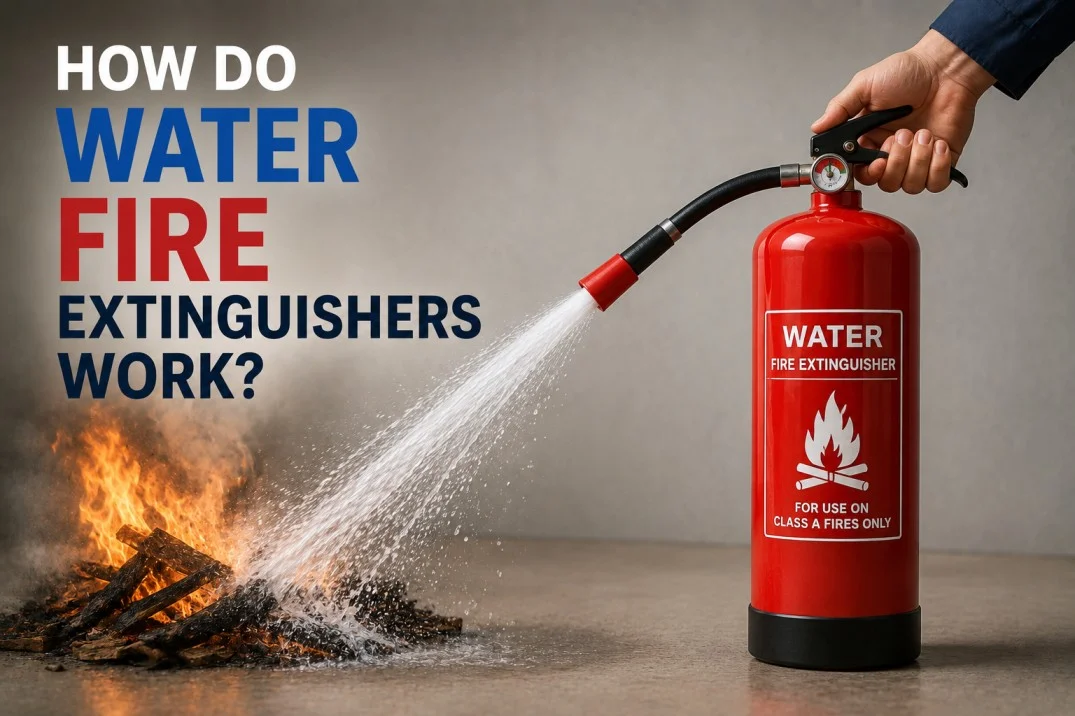
Water fire extinguishers work mainly by removing heat from the burning material. When pressurised water is discharged onto a suitable fire, it absorbs heat from the fuel and lowers its temperature below the level needed to sustain combustion. As the fuel cools, combustion weakens, and the flames eventually go out.
The cooling effect can also reduce the release of combustible vapours and helps prevent reignition, particularly in materials such as wood, paper and textiles. This is why standard water fire extinguishers are primarily designed for Class A fires involving ordinary solid combustibles.
How Do Water Fire Extinguishers Work Step by Step
Water fire extinguishers work mainly by removing heat from burning material. When you operate the extinguisher, pressure forces the water through a dip tube and out through the hose or nozzle. The water cools the fuel, reduces the heat available for combustion, and helps prevent the fire from reigniting once the visible flames have disappeared.
Step 1: Stored Pressure Forces the Water Out
A stored-pressure water fire extinguisher contains water and a pressurising gas inside its cylinder. In many modern extinguishers, nitrogen is used as the pressurising gas. The pressure provides the force needed to discharge the water when the extinguisher is activated.
When you squeeze the operating handle, the valve opens and allows the pressurised contents to move towards the outlet.
Step 2: The Water Travels Through the Dip Tube
Inside the cylinder is a dip tube, which extends down into the water. Once the valve opens, pressure pushes the water into this tube and towards the extinguisher’s hose or nozzle.
This internal arrangement allows the extinguisher to deliver the water without requiring the cylinder to be turned upside down.
Step 3: The Nozzle Directs the Water Onto the Fire
The water passes through the hose or nozzle, which controls how it is discharged. Depending on the extinguisher design, it may produce a concentrated jet or a spray of smaller droplets.
For a suitable Class A fire, the discharge should be directed towards the base of the fire and the burning material, rather than simply at the tops of the flames. This puts the water where it can remove heat from the fuel.
Step 4: Water Absorbs Heat From the Burning Fuel
Once water reaches the hot material, it absorbs thermal energy from the fuel. Water can absorb a significant amount of heat as it warms and even more energy when some of it changes from liquid into steam. This cooling effect is the primary extinguishing mechanism of a standard water fire extinguisher. Removing heat makes it increasingly difficult for the fire to sustain combustion.
Step 5: The Fuel Cools Below the Temperature Needed to Keep Burning
As water continues to remove heat, the temperature of the burning material falls. Combustion needs sufficient heat to continue, so reducing the fuel temperature eventually disrupts the conditions required to sustain the fire. The flames therefore weaken and disappear as the fuel can no longer maintain combustion.
Step 6: Cooling Reduces the Production of Combustible Vapours
Solid materials such as wood do not simply burn as intact solids. When heated, they undergo pyrolysis, breaking down and releasing gases and vapours that can burn.
Cooling the material reduces this heat-driven process and therefore reduces the amount of combustible vapour available to support the flames. This helps explain why cooling the fuel itself, rather than just disturbing the flames, is so important.
Step 7: Steam Can Provide an Additional Suppression Effect
When water reaches very hot surfaces, some of it may turn into steam. This steam can temporarily dilute or displace oxygen around the burning area, contributing to suppression.
However, oxygen displacement is a secondary effect, not the main reason a standard water extinguisher works. The key mechanism is still the removal of heat from the burning material.
Step 8: Continued Cooling Helps Prevent Reignition
Putting out visible flames does not necessarily mean every part of the fuel has cooled. Materials such as furniture, cardboard, and other porous solids can retain heat below the surface.
Continuing to cool the material, where it is safe and appropriate to do so, helps remove these remaining hot spots and reduces the risk of reignition.
Why Does Water Put Out Fire?
In simple terms, water does not primarily extinguish a fire by attacking the flames themselves. It takes away the heat that the fuel needs to keep burning, which is why standard water fire extinguishers are particularly effective against suitable Class A fires.
How to Use a Water Fire Extinguisher?
For a small, manageable Class A fire, remember PASS: Pull, Aim, Squeeze and Sweep.
- Check the fire: Make sure it is a suitable Class A fire involving materials such as wood, paper, cardboard or textiles. Do not use a standard water extinguisher on electrical, flammable liquid or cooking oil fires.
- Keep an escape route: Stay in a position where you can leave safely if the fire grows or conditions become dangerous.
- Pull the pin: Remove the safety pin or release mechanism according to the extinguisher’s instructions.
- Aim at the base: Point the hose or nozzle towards the base of the fire and burning material, not the top of the flames.
- Squeeze the handle: Press the operating handle to release the water.
- Sweep side to side: Move the nozzle across the base of the fire, concentrating on the burning material.
- Stop if conditions worsen: If the fire grows, smoke becomes overwhelming, your escape route is threatened, or the extinguisher is not controlling the fire, evacuate immediately and call the emergency services.
What Is Inside a Water Fire Extinguisher?
A water fire extinguisher mainly contains water and a pressurised gas, usually nitrogen or compressed air, which forces the water out when the handle is squeezed. Some models may also contain additives such as wetting agents or antifreeze to improve performance. Inside, a dip tube, valve, lever and nozzle work together to deliver the water onto the fire.
- Water: The main extinguishing agent that absorbs heat.
- Pressurised gas: Forces water through the dip tube and nozzle.
- Dip tube: Carries water from the cylinder to the valve.
- Valve and lever: Control the release of pressurised water.
- Nozzle: Directs and distributes the water onto the burning material.
- Additives: Some models contain wetting agents or antifreeze for specific applications.
Types of Water Fire Extinguishers
Water fire extinguishers are mainly designed for Class A fires involving materials such as wood, paper, cardboard, and textiles. Different models use different discharge patterns or additives to improve cooling, coverage or fire control.
Water Jet Extinguishers
Release a concentrated stream of water to cool burning solid materials, including deep-seated Class A fires.
Water Spray Extinguishers
Discharge water as fine droplets across a wider area, providing effective cooling and better coverage than a traditional jet.
Water Additive Extinguishers
Contain additives that reduce water’s surface tension, helping it spread and penetrate burning materials more effectively.
Water Mist Extinguishers
Produce microscopic water droplets for rapid heat absorption. Depending on their certification, some models can be suitable for additional risks beyond Class A fires.
| Type | How It Discharges | Typical Use |
| Water Jet | Concentrated stream | Class A |
| Water Spray | Fine droplets | Class A |
| Water Additive | Water with additives | Enhanced Class A |
| Water Mist | Microscopic droplets | Class A and selected additional risks |
What Fires Can You Use a Water Fire Extinguisher On?
Water fire extinguishers are designed primarily for Class A fires, involving ordinary solid materials that burn and leave ash or embers. They work by cooling the burning material and reducing its temperature below the point needed to sustain combustion.
Class A Fires
Water extinguishers are suitable for fires involving:
- Wood
- Paper
- Cardboard
- Textiles
- Furniture
- Other ordinary solid combustibles
Where Are Water Extinguishers Commonly Used?
Water extinguishers are commonly positioned in buildings where Class A combustible materials are present. Typical locations include:
- Offices: Near paper, cardboard and wooden furniture.
- Schools & Universities: In classrooms, libraries and lecture areas.
- Warehouses: Around pallets, packaging and combustible stock.
- Retail Shops: In stockrooms and areas containing boxed goods or textiles.
- Residential & Public Buildings: In homes, hotels, museums and community spaces.
Advantages and Limitations of Water Fire Extinguishers
Water fire extinguishers are cost-effective and highly effective at cooling Class A fires, making them suitable for materials such as wood, paper, cardboard and textiles.
However, their use is limited to specific fire risks and they must not be used on electrical equipment, flammable liquids, cooking oils or flammable metals. For properties with multiple fire risks, other extinguisher types may be more appropriate, such as dry powder fire extinguishers for certain Class A, B and C risks.
| Advantages | Limitations |
| Excellent cooling effect | Not suitable for electrical fires |
| Effective on Class A fires | Not suitable for flammable liquid fires |
| Can cool deep-seated materials | Not suitable for cooking oil fires |
| Helps reduce reignition | Not suitable for flammable metal fires |
| Leaves minimal residue | Can cause water damage |
| Cost-effective and easy to maintain | Standard models can freeze in cold conditions |
| Simple to operate | Only suitable for specific fire classes |
Do Water Fire Extinguishers Need Servicing?
Yes, water fire extinguishers need regular fire extinguisher servicing to remain safe, reliable and ready for use. Routine checks can identify pressure loss, corrosion, damage or faulty components before the extinguisher is needed in an emergency.
Servicing Schedule
- Monthly: Visually check for damage, correct pressure, an intact safety pin and seal.
- Every 12 Months: A competent technician should carry out a basic service, checking the extinguisher’s condition, pressure and weight in line with BS 5306.
- Every 5 Years: An extended service is required, including internal inspection, replacement of relevant components and recharging where necessary.
Need Help Choosing the Right Water Fire Extinguisher?
Not sure whether a water fire extinguisher is suitable for your premises or whether your existing extinguishers need servicing? Our fire safety specialists can assess your requirements and help ensure you have the right equipment for the risks present.
Contact London Safety Checks to discuss your fire extinguisher requirements.
FAQs
How do water fire extinguishers work?
A water fire extinguisher releases pressurised water onto the burning material. The water absorbs heat and cools the fuel below the temperature needed to sustain combustion. Because water can penetrate porous materials such as wood and textiles, it can also cool deeper hot spots and help prevent the fire from reigniting.
Why does water put out Class A fires?
Water is particularly effective on Class A fires because these involve solid materials such as wood, paper, cardboard and textiles. It absorbs a large amount of heat from the burning material, reducing its temperature and slowing combustion until the fire is extinguished.
Can you use water to extinguish a wood fire?
Yes. Water is suitable for wood fires because wood is a Class A combustible material. Applying water to the base of the fire cools the wood and can penetrate into the material, helping deal with hidden heat and embers that could otherwise cause reignition.
Can you use water on an electrical fire?
Do not use a standard water fire extinguisher on live electrical equipment. Water conducts electricity, creating a risk of electric shock. Isolate the electrical supply if it is safe to do so and use an extinguisher specifically rated for the electrical risk. Some specialist water-mist extinguishers are electrically tested, but their certification and operating instructions must be checked first.
Can you use water on an oil fire?
No, never pour or discharge ordinary water onto a burning oil or fat fire. Water can rapidly turn to steam and violently spread burning oil, making the fire much larger. For cooking-oil fires, use the appropriate wet chemical extinguisher or another method specifically rated for the risk.
When should you not use a fire extinguisher?
Do not attempt to use an extinguisher if the fire is large or rapidly spreading, producing heavy smoke, blocking your escape route, or involves a fire type that the extinguisher is not designed for. If you cannot tackle the fire safely from a clear escape route, evacuate immediately, stay out, and call 999.