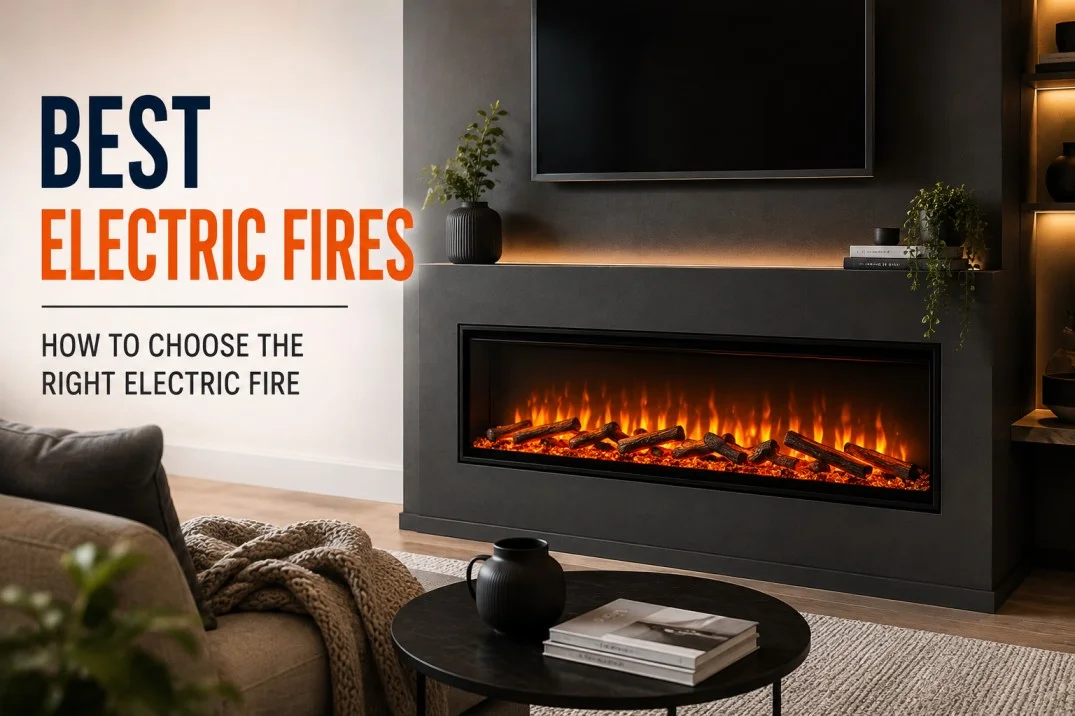
Choosing the best electric fire depends on how you plan to use it, where it will be installed, and which features matter most to you. A built-in panoramic fire may be ideal for a media wall, while an inset model can be a better fit for an existing fireplace.
The right choice comes down to installation type, size, flame realism, heat output, features, running costs and budget. This guide compares the main options so you can choose a fire that suits both your home and your needs.
What Are the Best Electric Fires?
The best electric fire depends on where you want to install it and what matters most to you. Some models are designed for wide media walls, while others focus on realistic flame effects, traditional fireplace styling or value. Rather than choosing on price alone, compare the fire’s design, flame technology, heat output and installation requirements. 3
The Main Types of Electric Fires
Electric fires come in several designs, from slim wall-mounted models to built-in panoramic fires, traditional inset models and complete fireplace suites. The best type depends on your existing space, the amount of installation work you want to undertake and the look you want to achieve.
Inset Electric Fires
Inset fires sit inside an existing fireplace opening or purpose-built recess, making them a natural choice for homes with a traditional fireplace.
Best for: Existing fireplace openings, chimney breasts and classic interiors.
Built-In / Hole-in-the-Wall Electric Fires
These fires are recessed into a wall or media wall for a clean, integrated finish. They are particularly popular beneath TVs and in contemporary living rooms.
Best for: Media walls, feature walls and modern interiors.
3-Sided Electric Fires
With flame views from the front and both sides, 3-sided models create a panoramic effect and work particularly well where the sides of the fire remain visible.
Best for: Open-plan rooms, large media walls and statement installations.
2-Sided / Corner Electric Fires
Two-sided fires provide a front and side view, making them useful at the end of a media wall or within a corner installation.
Best for: Corner layouts, room dividers and media wall returns.
Wall-Mounted Electric Fires
Wall-mounted models attach directly to the wall without requiring a deep recess. They offer a modern fireplace appearance with less structural work.
Best for: Smaller rooms, flats and simpler installations.
Electric Fireplace Suites
A fireplace suite combines the fire with a surround and often a hearth or mantel, giving you a complete fireplace without designing each component separately.
Best for: Traditional styling, homes without existing fireplace openings and minimal construction.
Freestanding Electric Fires
Freestanding models can be positioned independently and range from traditional stove-style designs to contemporary fireplaces.
Best for: Flexible layouts and homeowners who do not want a permanent built-in installation.
How to Choose the Right Electric Fire Size
Choose an electric fire based on your available space, TV size, installation depth and heating needs. A larger fire is not always better; the right model should look proportionate and fit the installation correctly.
Measure Your Space First
Before choosing a model, measure the width, height and available depth of the wall or fireplace, including the full recess for built-in installations. Also consider the surrounding space needed for the TV, shelving and furniture. Always compare your measurements with the manufacturer’s installation requirements before buying.
Match the Fire to Your TV
For a media wall, the fire should look balanced beneath the TV. A wide panoramic fire usually suits a large television, while a smaller model works better in a compact setup. Consider the TV width, fire width, wall size and viewing distance rather than following a fixed size rule.
Check Depth and Heat Output
Depth is important for recessed fires. A deeper model may provide more space for a detailed fuel bed but will require a larger cavity. For heating, most domestic electric fires offer around 1kW–2kW. Choose based on the room’s size, insulation and layout rather than simply buying the highest output.
Why Bigger Isn’t Always Better
An oversized fire can dominate a small room, increase installation requirements and cost more. Choose the largest size that fits comfortably and looks proportionate to your room and media wall.
Best Electric Fires for Different Needs
The right electric fire depends on where it will be installed and what matters most to you. Use the following as a quick guide when comparing models.
Electric Fires for Media Walls
For a media wall, a wide built-in or panoramic fire can create a balanced feature beneath the TV. Before choosing a model, check its width, recess depth, heater outlet and required ventilation. TV clearance, sockets, cables and soundbar placement should also be planned before construction.
Electric Fires for Realistic Flames
If realism is important, focus on the flame depth, movement, fuel bed and lighting, rather than product images alone.
| Flame Technology | Best For |
| Standard LED | Budget options |
| 3D/layered LED | Greater visual depth |
| Rotisserie-style | Dynamic flame movement |
| Water vapour | Maximum realism |
If possible, see the fire running in person. Room lighting and viewing distance can make a noticeable difference to the flame effect.
Electric Fires for Small Rooms
Choose a compact model that fits the room without overpowering it. Wall-mounted or smaller inset fires can save space, while flame-only operation lets you enjoy the effect without adding heat.
Electric Fires for Large Rooms
Larger rooms can suit wide panoramic fires that provide better visual scale. A 2kW heater can offer useful supplementary warmth, although insulation, ceiling height and room layout will affect how well the heat spreads.
Electric Fires for Existing Fireplaces
For an existing fireplace, an inset electric fire is often the simplest option. Measure the opening’s width, height and depth, then compare these measurements with the manufacturer’s fitting requirements before buying.
How Much Heat Does an Electric Fire Produce?
Most domestic electric fires produce around 1kW to 2kW of heat, depending on the model and selected setting. A 1kW fire is suitable for lighter heating, while a 2kW model provides more warmth for larger living spaces. If you mainly want the flame effect, maximum heat output may not be a priority.
The amount of warmth you actually get also depends on room size, insulation, windows, ceiling height and layout. A 2kW fire can provide useful supplementary heat, but larger or open-plan rooms may need additional heating to maintain a comfortable temperature.
How Much Does an Electric Fire Cost to Run?
An electric fire is generally straightforward to calculate. Your cost depends on its power rating, electricity unit rate, and how long you run it. Use the formula below to estimate the hourly cost. Actual costs may be lower when a thermostat cycles the heater on and off.
Power (kW) × electricity price per kWh = cost per hour
| Setting | Cost/Hour at 30p/kWh |
| 1kW | 30p |
| 1.5kW | 45p |
| 2kW | 60p |
What Affects Running Costs?
Running costs depend on the heat setting, usage time and electricity tariff. A thermostat can reduce consumption by cycling the heater, while good insulation helps retain heat. Using flame-only mode also keeps electricity use much lower.
Electric Fire Safety and Maintenance
Electric fires are generally low-maintenance, but correct installation, clear ventilation and regular checks are important for safe operation. A professional fire risk assessment can also help identify wider fire hazards and recommend suitable safety measures.
- Keep heater vents and air openings clear.
- Follow the manufacturer’s required clearances.
- Keep children, pets and combustible items away from the fire.
- Clean the glass and fuel bed as recommended.
- Check the plug and cable for visible damage.
- Keep electrical connections away from water.
- Stop using the fire if you notice unusual smells, overheating, sparks or electrical faults.
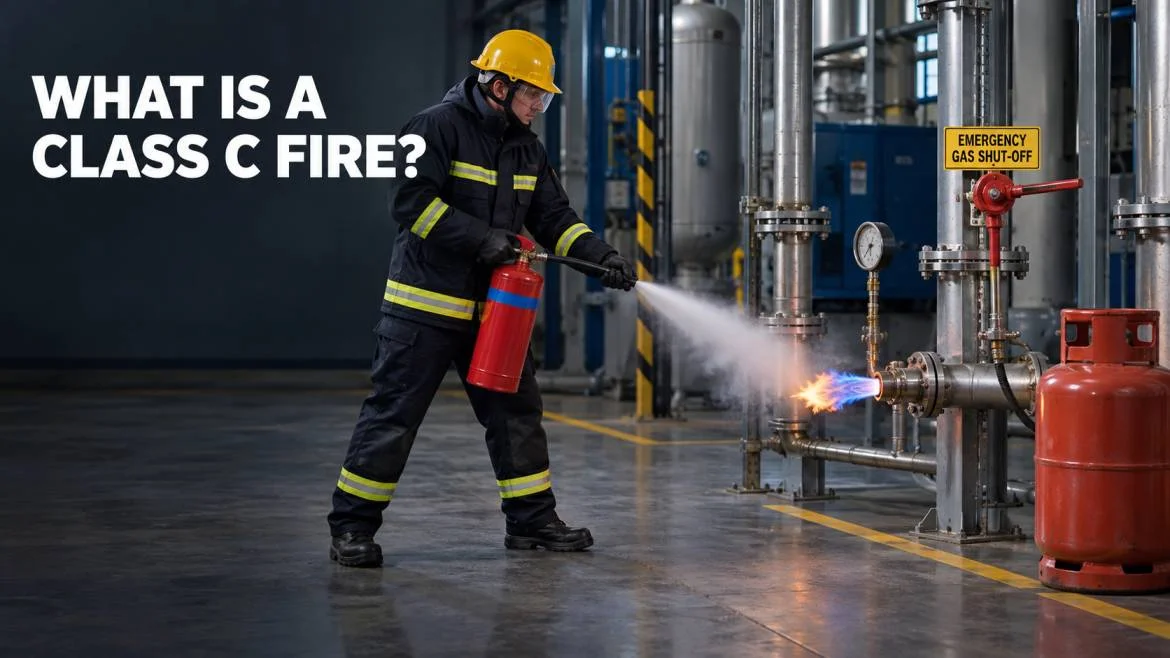
For permanent installations, use the correct electrical connection and avoid overloading sockets or using extension leads where the manufacturer does not permit them. If an electrical fault occurs, do not use water on the fire. Switch off the power if it is safe to do so and refer to our guide on how to put out an electrical fire safely for the appropriate response.
Common Electric Fire Buying Mistakes
A good-looking electric fire can still be the wrong choice if you overlook size, installation, heating needs or flame quality. Avoid these common mistakes:
- Choosing the wrong size: A fire that is too small can look lost, while an oversized model may dominate the room.
- Ignoring installation depth: Always check the required recess before choosing a built-in fire.
- Focusing only on heat output: A higher kW rating does not necessarily mean a better fire. Consider how you will actually use it.
- Overlooking electrical requirements: Check whether the model can be plugged in or requires a dedicated electrical connection.
- Choosing based only on price: A cheaper model may compromise on flame quality, fuel-bed detail, or controls.
- Ignoring flame settings: Adjustable brightness and flame-only operation can make the fire much more practical.
- Forgetting TV clearances: If installing beneath a TV, check the fire manufacturer’s specific clearance requirements first.
Need Help Choosing the Right Electric Fire?
Choosing the right electric fire involves more than comparing styles and prices. If you need advice on fire safety, installation requirements, or suitable safety measures, speak to the team at London Safety Checks.
Need professional fire safety advice? Get in touch with London Safety Checks today.
FAQs
Can an Electric Fire Heat a Whole Room?
Yes, an electric fire can provide useful heat to a room, but it is generally best considered supplementary or zonal heating. In a large open-plan space, a single fire may not distribute heat evenly throughout every connected area.
What is the best electric fire to buy?
The best electric fire depends on your installation, room size, desired flame realism, heating requirements and budget. For most buyers, correct sizing and flame quality should come before optional smart features.
What is the best electric fire for a media wall?
A wide built-in panoramic fire is often a strong choice for a media wall. The correct model should also have suitable depth, ventilation and TV clearance requirements for the planned installation.
Which electric fire has the most realistic flames?
Advanced 3D, layered and water-vapour systems can provide highly realistic effects. However, fuel-bed design, flame movement, brightness and viewing conditions also affect realism.
What is the best 3-sided electric fire?
The best 3-sided fire is one that matches the available recess and viewing angles. These models are particularly suitable for media walls, open-plan rooms and installations where both sides remain visible.
Is a 1kW or 2kW electric fire better?
A 1kW fire may be sufficient for lighter supplementary heating, while a 2kW model provides greater heat output. The better option depends on the room and how frequently you plan to use the heater.
Can an electric fire heat a living room?
Yes. Electric fires can provide useful supplementary heat to living rooms, although their effectiveness depends on room size, insulation, ceiling height and layout.
Are electric fires safe to leave on overnight?
It is best to follow the specific manufacturer’s operating instructions rather than assuming every electric fire is designed for overnight use. Use built-in timers where available and never operate a fire with damaged cables, blocked vents or other faults.